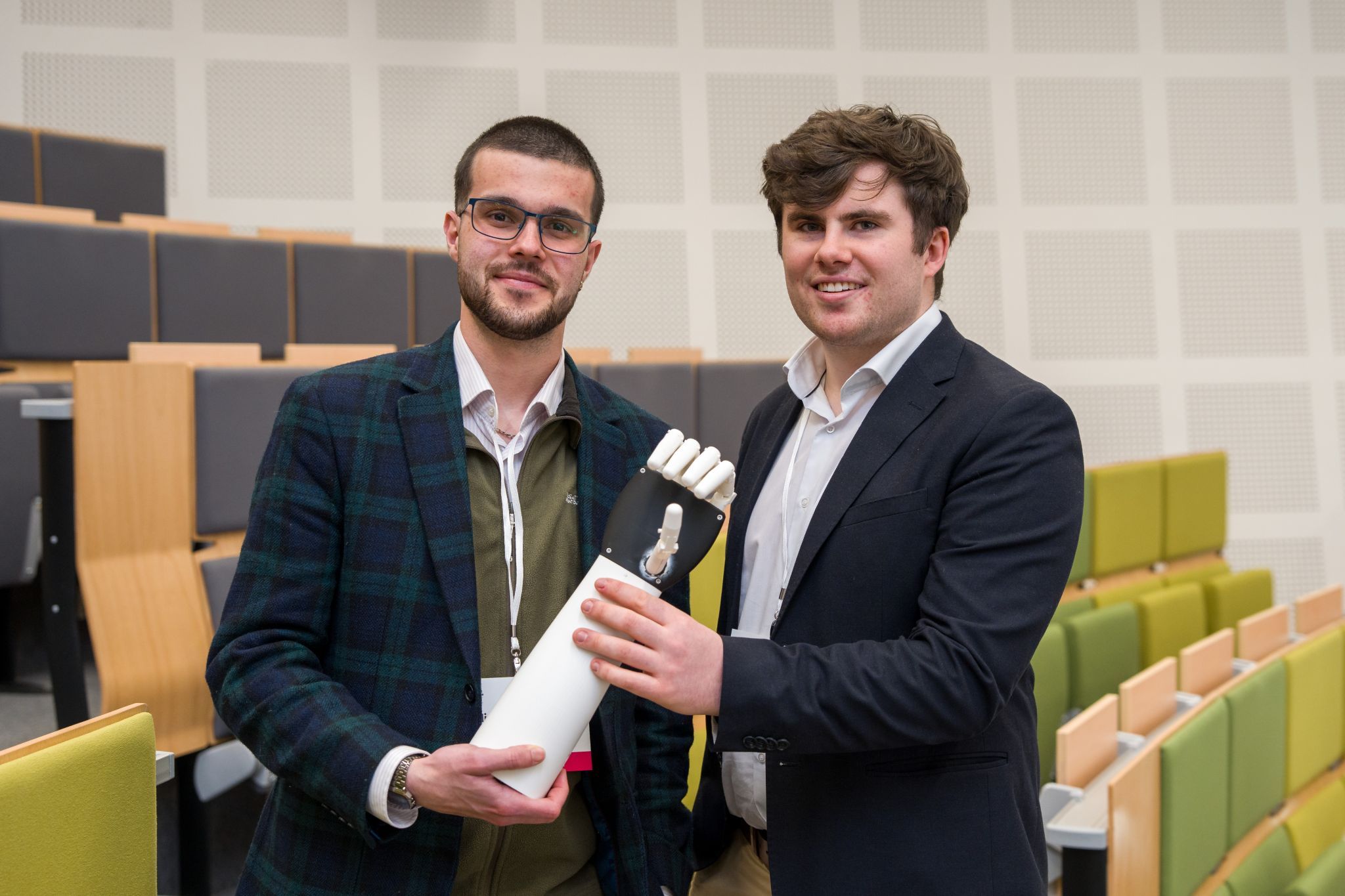
Status: pre-clinical. Engineering prototypes in active development.
“Competitions like this matter because of the momentum and the credibility they create for early ventures trying to make a dent in a genuinely hard problem.”
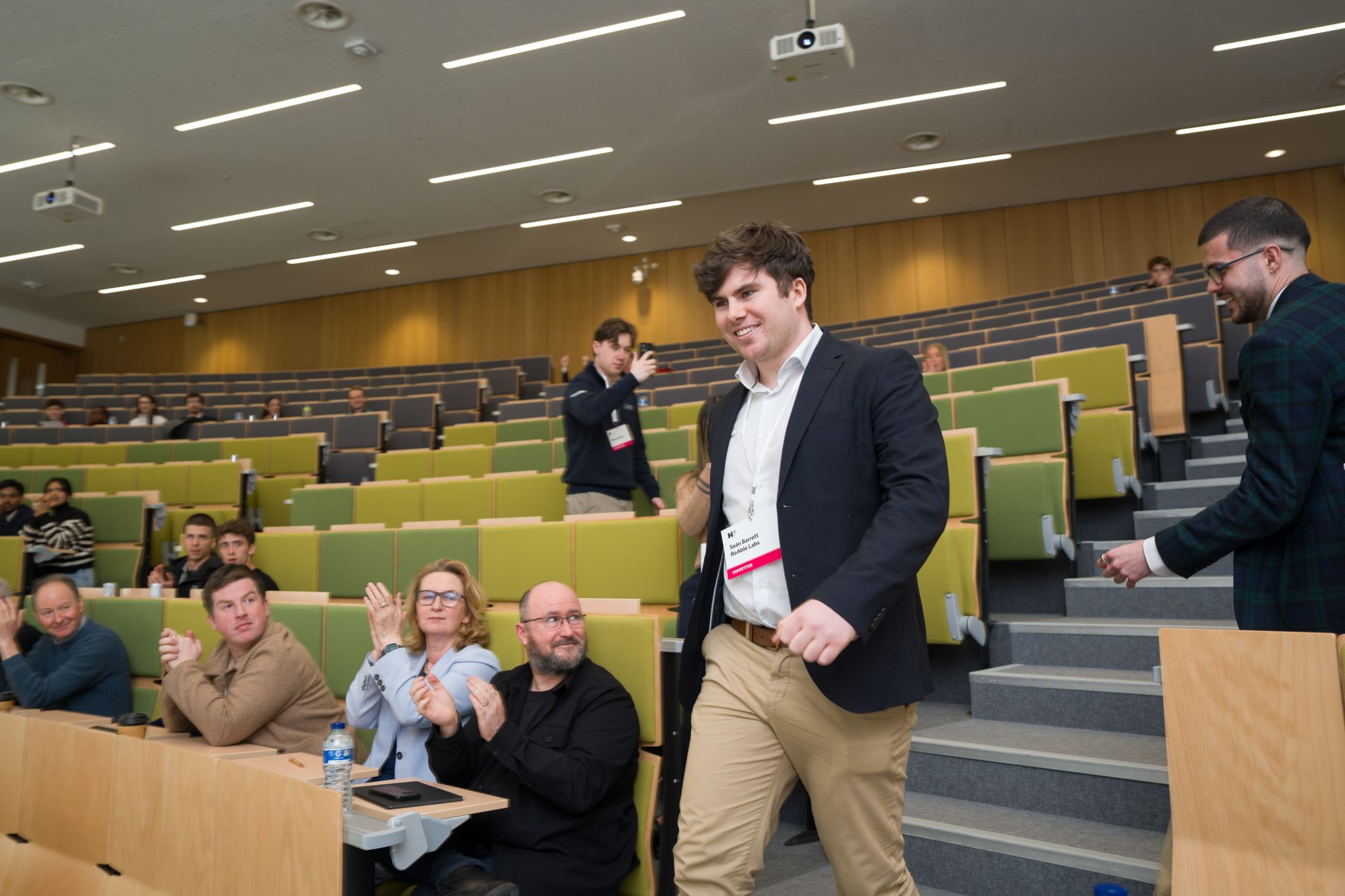
It is not every day that you get to stand on a stage at UCD, pitch the thing you have been building in evenings and lab corners for months, and walk off having won. But that is how this spring went for us. ReAble Labs took the top spot at the Hult Prize Irish National Final, and we are now through to the global stage of one of the largest student-led startup competitions in the world.
I want to share what this means for us, and why it matters beyond the trophy.
What the Hult Prize is
The Hult Prize brings together student founders from across the globe to build ventures that solve real problems. National finals run in dozens of countries, and the winners go forward to compete internationally for a place in the Global Accelerator. It is competitive, it is rigorous, and the standard of the teams you are up against is genuinely high. Winning the Irish final meant pitching ReAble against some excellent founders and convincing the judges that what we are building deserves to go further.
It made the day even more meaningful that Professor Maggie Cusack, President of MTU, was there to see it. ReAble grew out of work I have been doing as a student, and having the university’s support in the room mattered to both me and the team.
What we pitched
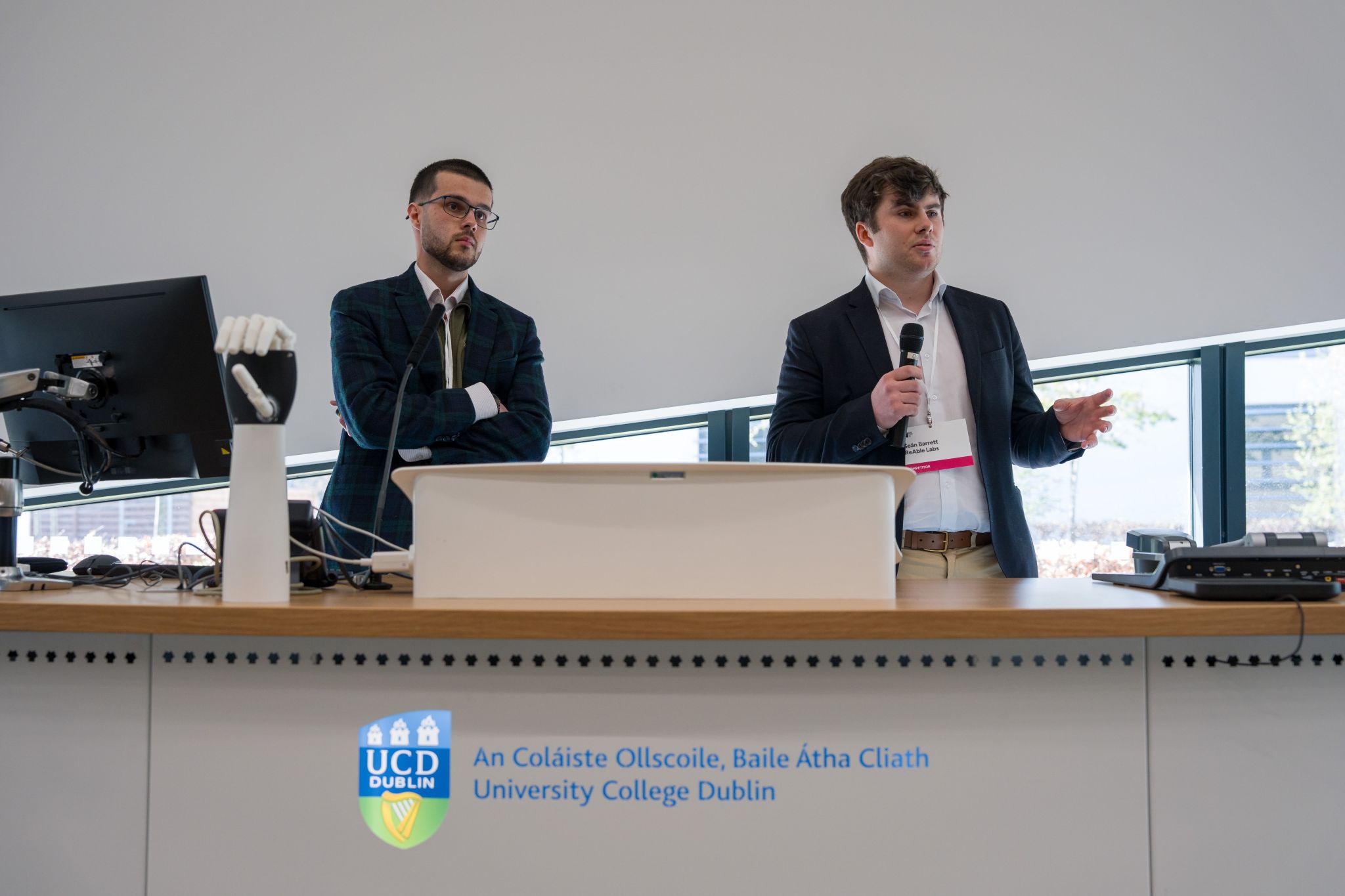
ReAble Labs is building accessible myoelectric prosthetics, with a particular focus on the part of the process that quietly determines whether a device actually helps: the socket and the fit. As I wrote about after our recent visit to the National Rehabilitation Hospital, the realities of prosthetic care are not only technical. Patients can wait many months for a first device, residual limbs change shape over time and require new sockets, funding is fragmented, and roughly half of devices end up abandoned.
Our approach is to make a well-fitting socket far faster and cheaper to produce, capturing a scan of the residual limb on a phone with LiDAR and translating it into a CAD model that a prosthetist reviews and approves. The clinician stays in control; the slow manual steps in between get removed. That is the case we made on stage, and it is the case we keep making everywhere we go.
Where we are now
Winning the national final put us into the global top 50, and we are currently working our way through the Hult Digital Incubator, a programme designed to sharpen the ventures still in the running before the field narrows to those who reach the Global Accelerator.
The incubator is not a victory lap. It is a real body of work, with mentorship, milestones, and a high bar for what counts as meaningful progress. We are using it the way it is meant to be used: to pressure-test our assumptions, to commit to a concrete and verifiable impact milestone, and to come out the other side a stronger company than we went in. Our goal is clear. We want to keep advancing.
Thank you
To the Hult Prize team, the judges, MTU, and everyone who has backed ReAble along the way, thank you. Competitions like this matter not because of the prizes but because of the momentum and the credibility they create for early ventures trying to make a dent in a genuinely hard problem.
We have a long way to go, and a lot to prove. But moments like this are a reminder that the problem we have chosen is one people believe is worth solving. We intend to keep proving them right.
Next step
Want to take the next step?
No commitment, no pressure. A chat about what might be possible.
Read our story